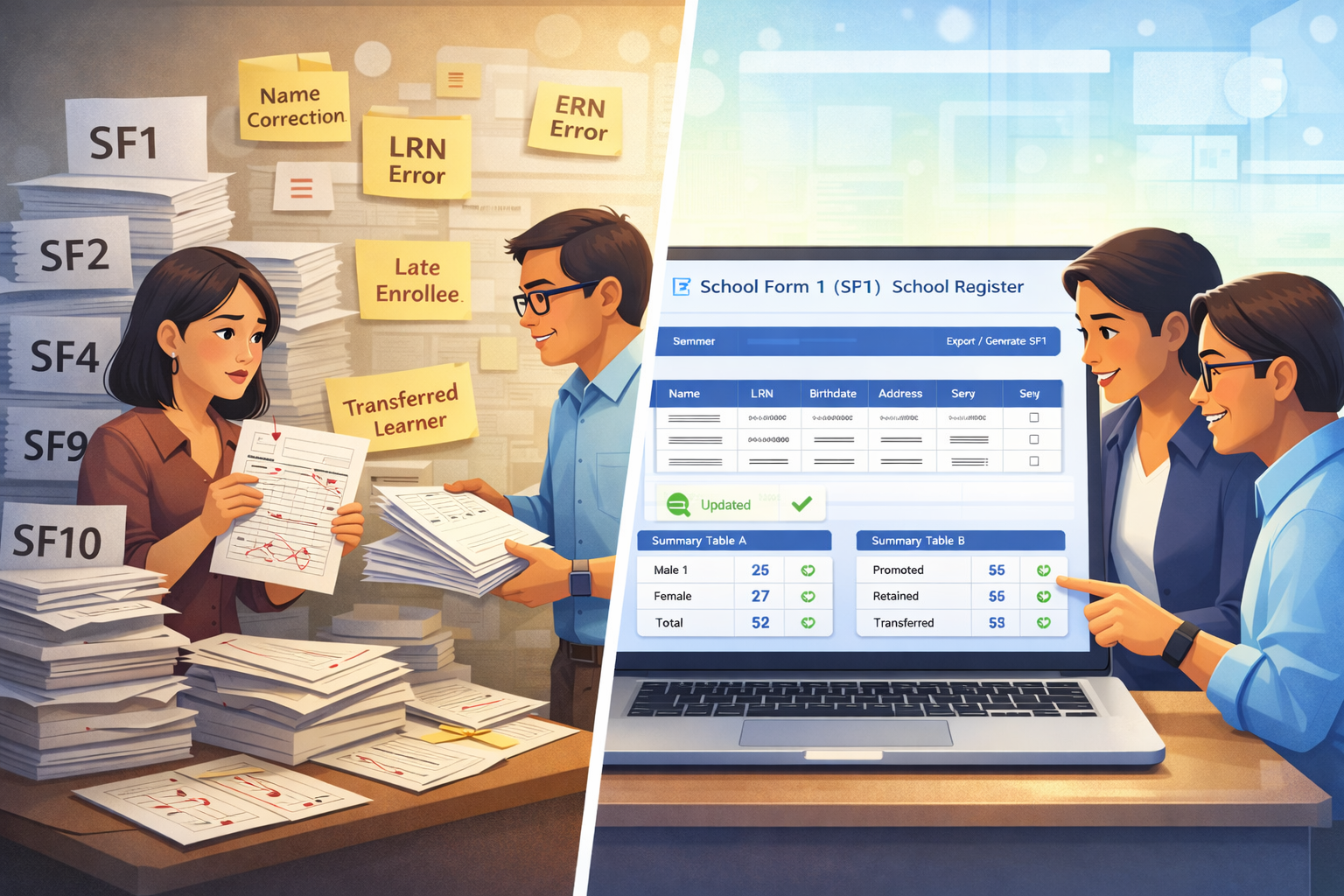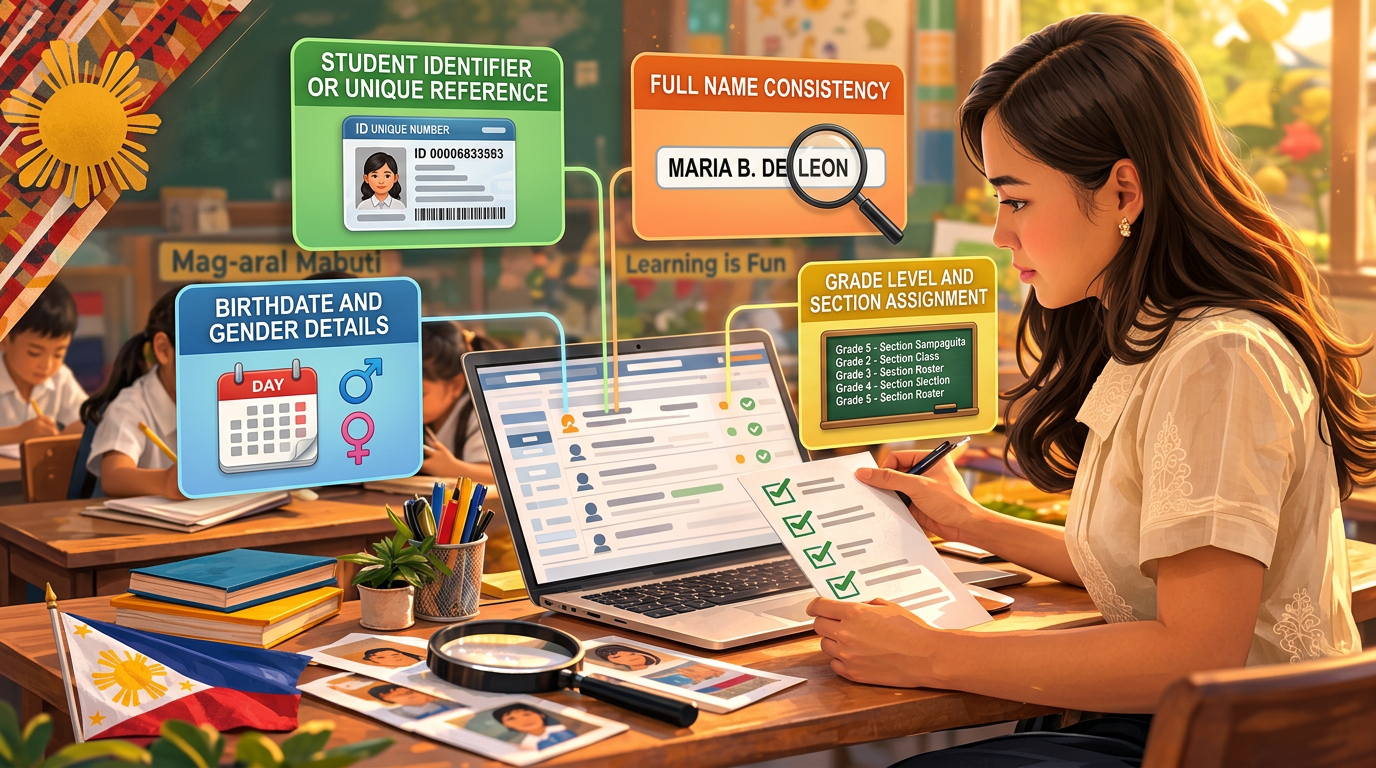
Duplicate student records are a common issue in school enrollment systems. During busy enrollment periods, the same learner may accidentally be entered into the database more than once.
When duplicate profiles appear, grades, attendance, and enrollment information may become split across multiple records. This makes it difficult for teachers and administrators to track a student’s full academic history and can lead to inaccurate class lists or reports.
Understanding why duplicate records occur—and how schools can prevent them—helps maintain cleaner and more reliable student data.
Common Reasons Duplicate Student Records Appear
Duplicate records usually happen because of small differences in how student information is entered or because existing profiles are not located during enrollment.
Several situations commonly lead to this problem.
The Same Student Is Encoded More Than Once
During enrollment periods, teachers and school staff often process large numbers of student records at the same time. In busy situations, the same learner may be entered into the system more than once.
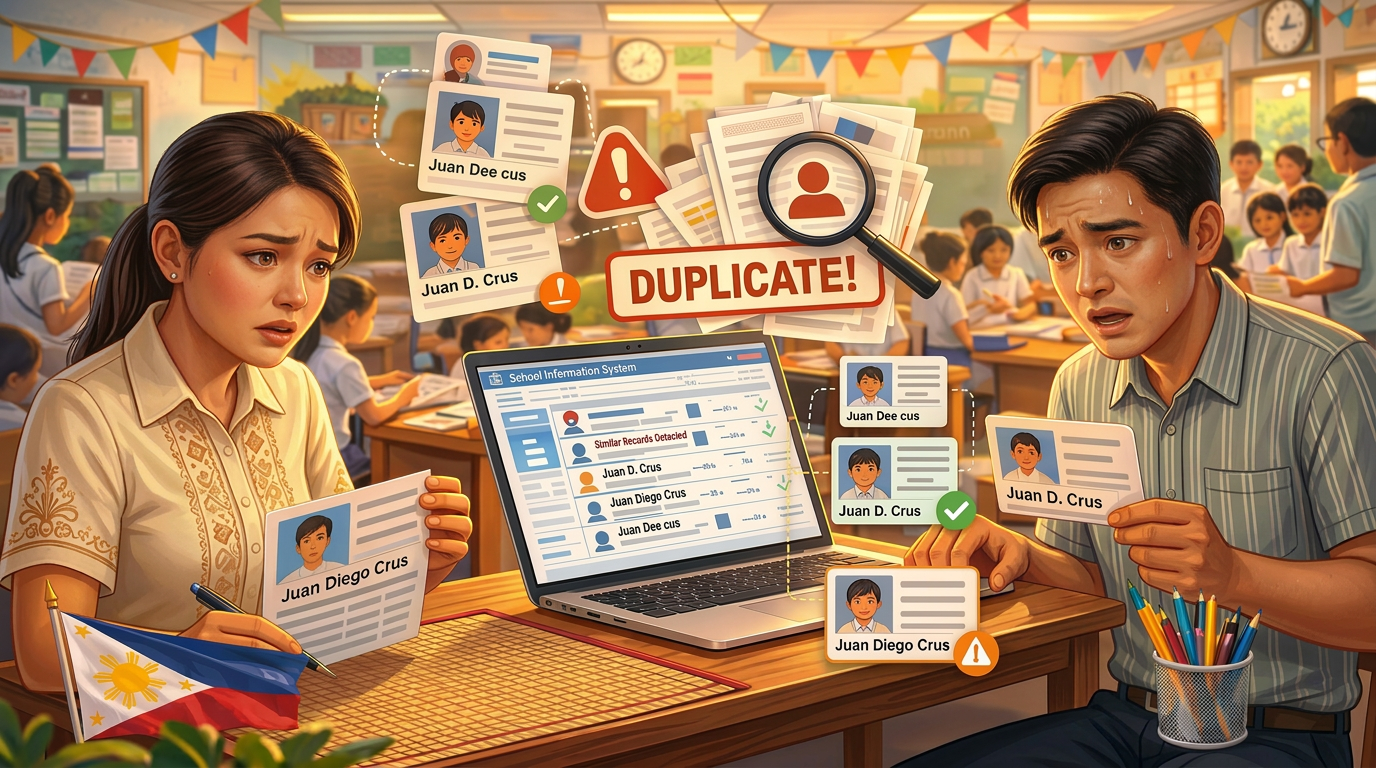
For example, a student might appear twice in the database if one record is entered as “Juan Dela Cruz” and another as “Juan D. Cruz.” Even small differences such as middle initials, spacing, or spelling variations can cause the system to treat the entries as separate students.
Education Management Information Systems (EMIS) guidelines note that heavy workloads during registration periods increase the risk of duplicate entries in school databases.
Student Information Is Entered Differently
Small variations in how student information is recorded can also create duplicate records.
Examples include:
- spelling differences in names
- missing middle names or initials
- different birthdate formats
- extra spaces or punctuation
Research on data quality shows that inconsistent formatting is one of the most common causes of duplicate records in large databases.
Transfer and Returning Students
Transfer students or returning learners may already have an existing record in the system.
If a new profile is created instead of reconnecting the student to the existing record, the learner may appear twice in the database.
The World Bank notes that student mobility increases the risk of duplicate records when identity verification procedures are not consistently followed.
How Duplicate Student Records Affect School Data
Duplicate records may seem like a minor technical issue, but they can create several operational problems for schools.
Split Student Academic History
When a student has multiple profiles, grades and attendance may be recorded under different records. This makes it difficult for teachers to view the learner’s complete academic progress.
Incorrect Enrollment Counts
Duplicate entries can increase the number of students appearing in the system. This may affect school reports, enrollment summaries, and administrative planning.
Confusion in Class Lists
Teachers may accidentally record attendance or grades under the wrong student profile if duplicate records exist.
Education organizations such as the OECD note that duplicate entries are one of the most common causes of inaccurate statistics in education databases.
Practical Ways Schools Can Prevent Duplicate Student Records
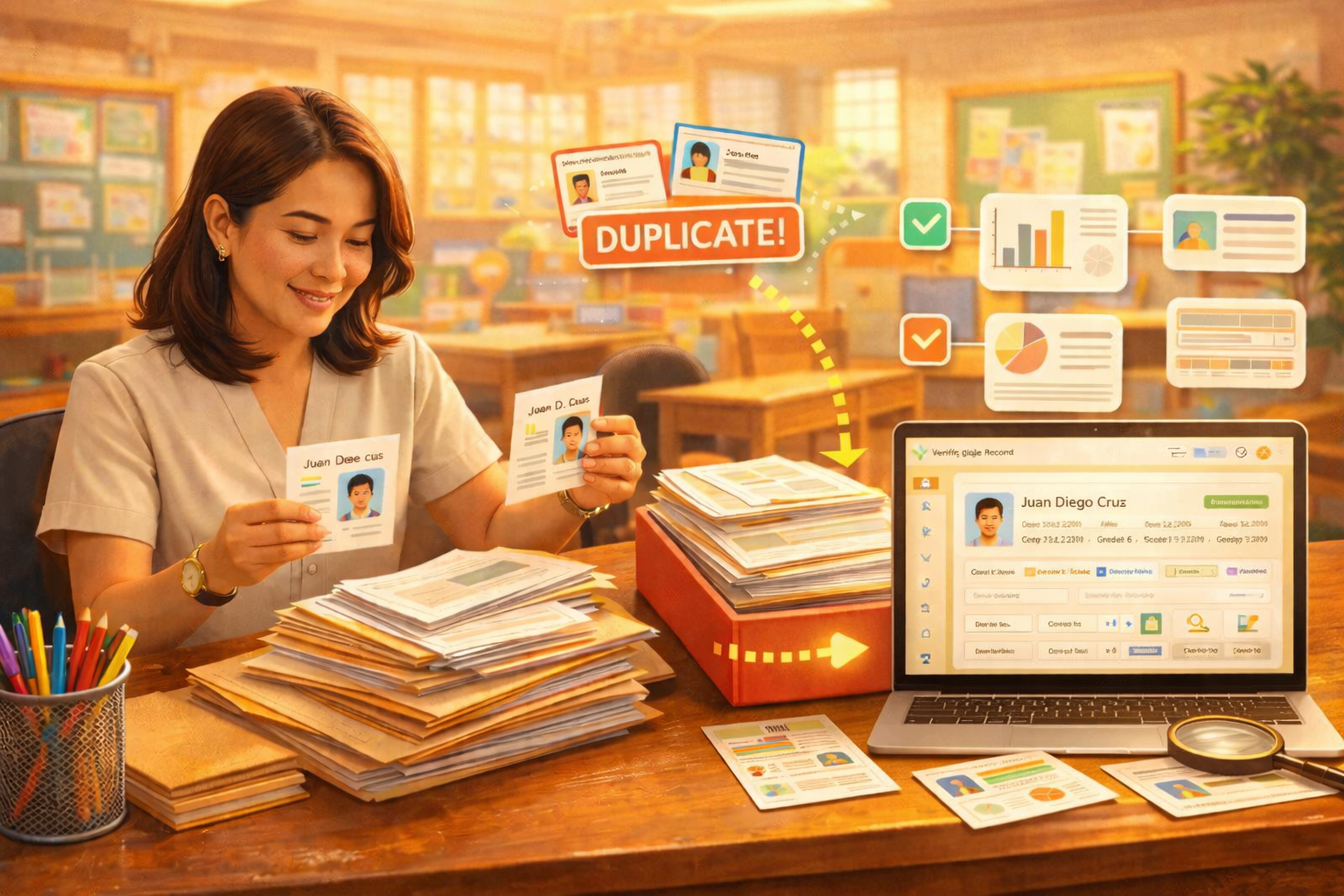
Schools can reduce duplicate student records by following simple record-checking practices during enrollment. These steps help ensure that each learner appears only once in the database.
Check for Existing Records Before Creating a New One
Teachers should search the database before encoding a new student profile.
Searching by name, birthdate, or student identifier helps confirm whether the learner already exists in the system.
This small step can prevent many duplicate entries.
Standardize How Student Information Is Entered
Consistent data entry rules help the system recognize the same student across records.
Schools should use the same formatting for:
- student names
- birthdates
- middle initials
- student identifiers
Standardized data entry improves overall data quality and reduces the chance of duplicate profiles.
Review Similar Records Carefully
If the system displays similar names during a search, teachers should review the details carefully before confirming enrollment.
Comparing information such as birthdate, gender, and grade level helps determine whether the records belong to the same student.
Validate Records Before Reporting Deadlines
Checking student records early helps schools identify possible duplicates before official reports are submitted.
Correcting records early is much easier than fixing large numbers of errors at the end of the school year.
A Simple Routine Teachers Can Follow to Keep Student Records Clean

Teachers can follow a simple routine to maintain accurate student records.
- Accurate student counts in enrollment summaries
- Cleaner class lists that are easier to verify
- Complete student history stored under one profile
- More reliable school reports for administrators
- Less time spent correcting records
The OECD explains that duplicate entries are one of the most common causes of inaccurate statistics in education databases. Maintaining a single record for each learner helps schools preserve reliable student data across academic years.
Common Student Record Errors Schools Should Check During Enrollment
Duplicate student records are only one type of data issue that schools may encounter during enrollment and record management.
Other common student data errors include:
Incomplete Student Profiles
Some records may be created with missing information such as birthdate, gender, or previous school details. Incomplete records make it harder to confirm a student’s identity.
Incorrect Grade Level Assignments
Students may sometimes be assigned to the wrong grade level during enrollment. This can happen when records are carried over from the previous school year without careful review.
Unfinished Enrollment Drafts
In some cases, student records are started during enrollment but not fully completed. These unfinished records may remain in the system and create confusion during class list preparation.
Inconsistent Student Information
Small differences in how student names or personal details are recorded can create multiple variations of the same student in the database.
Regular record review helps schools detect these issues early and maintain accurate student information.
Frequently Asked Questions
Author
Better Teaching Solutions
Making teaching easier, giving more time for our hard working teachers!